
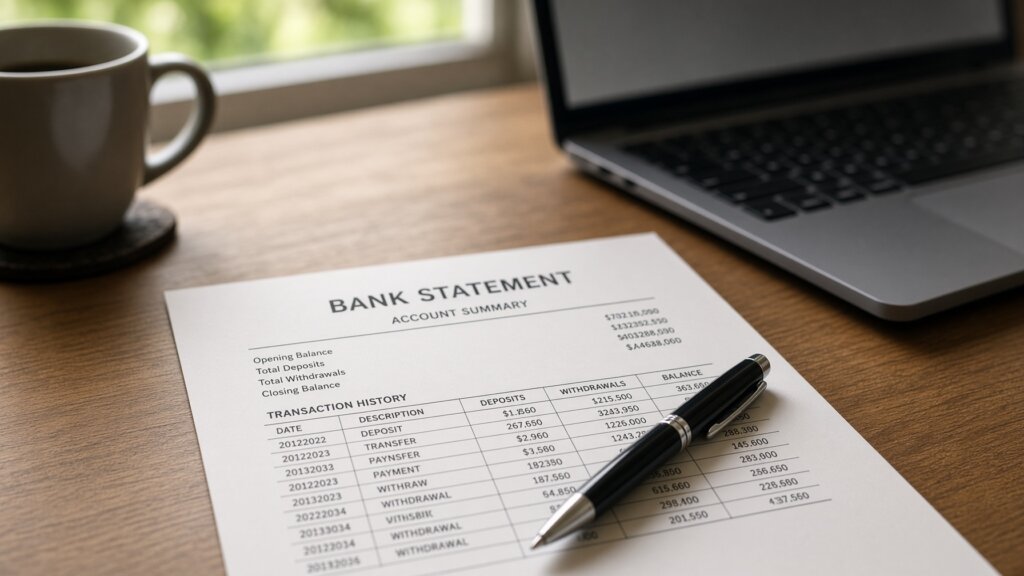
A client corrected her bookkeeper this month. The bookkeeper was me, and she was right. It happened in the middle of a bank reconciliation.
I keep a schedule of every account a client has: which one is the checking account, which one is the credit line, when each statement closes. On hers, I had two labels swapped. The account I had been calling the line of credit was a checking account.
She wrote back and told me. I opened the statements, which had been sitting in my inbox the whole time, and there it was. I told her: “You’re right, and thank you for catching it.”
Here’s the thing. Nothing had gone wrong in her books yet. But I had been about to do a month of work from my own list.
The list is somebody’s memory. The statement is the bank’s record.
A list of accounts is a note someone wrote once. It was right the day it was written, as far as that person knew. Then an account gets renamed, a card gets reissued, a new one gets opened, and the list just sits there looking official.
The statement doesn’t have that problem. It says what the bank says.
And the statements told me one more thing that day. There was an account at her bank that was not in her books at all. No list would ever have shown me that, because the list was built from the books.
The second tell: a correction with no source
A few days later, same set of books, I was matching her business card. The statement carried one card number. The books carried the card under a different one. Same card.
So I checked every charge on two statements against the register, line by line. They all matched. The balance still would not agree.
The gap turned out to be exactly one old journal entry, labeled as a correction. It had not corrected anything. Somebody, months earlier, had taken real spending out of the books so the balance would match, and moved on.
That is the tell I look for: a correction with no source behind it. A real correction can point at something. A statement, a receipt, a bank notice. An entry that only exists to make two numbers agree is hiding the reason they didn’t.
Three things worth checking before your next bank reconciliation
1. Does every account on the bank’s website show up in the books? Log in and count them. Checking, savings, cards, credit lines. If the bank shows six and the books show five, start there.
2. Was the last reconcile done from the statement? The ending balance and the ending date come off the statement itself, not from what the software suggests.
3. Does every entry called an adjustment or a correction have a reason attached? If nobody can say what it fixed, it probably didn’t fix anything.
None of this takes special software. A good bank reconciliation takes opening the statement first.
I have been around business books for over 25 years, and I still got caught trusting my own list. The fix was not being smarter. It was going back to the source.
So here is my question for you: which number in your books was “fixed” by someone who never said why?
If you would like a second set of eyes on your books, the bookkeeping health check is a free look. And if you reconcile your own accounts, my step-by-step reconciliation guide walks through it from the statement.
